Why Is Exercise Important After 50?
As you get older, maintaining muscle strength, balance, flexibility, and cardiovascular fitness becomes increasingly important. Age-related changes can affect how easily you perform everyday movements, especially when physical activity becomes less frequent.
Regular exercise helps address these changes by giving your muscles, heart, and joints appropriate challenges.
A well-planned fitness routine can help you:
Maintain muscle strength and physical function.
Improve balance and coordination.
Support bone health.
Maintain cardiovascular endurance.
Make walking, climbing stairs, and household activities easier.
Support a healthy body weight.
Maintain independence as you age.
The goal isn’t to reverse aging. It’s to maintain the physical abilities that help you enjoy your daily life.
4 Types of Exercises Adults Over 50 Should Include
A balanced workout program should train more than one aspect of fitness. Combining different types of exercise helps develop strength, endurance, mobility, and stability.
1. Strength Training to Maintain Muscle
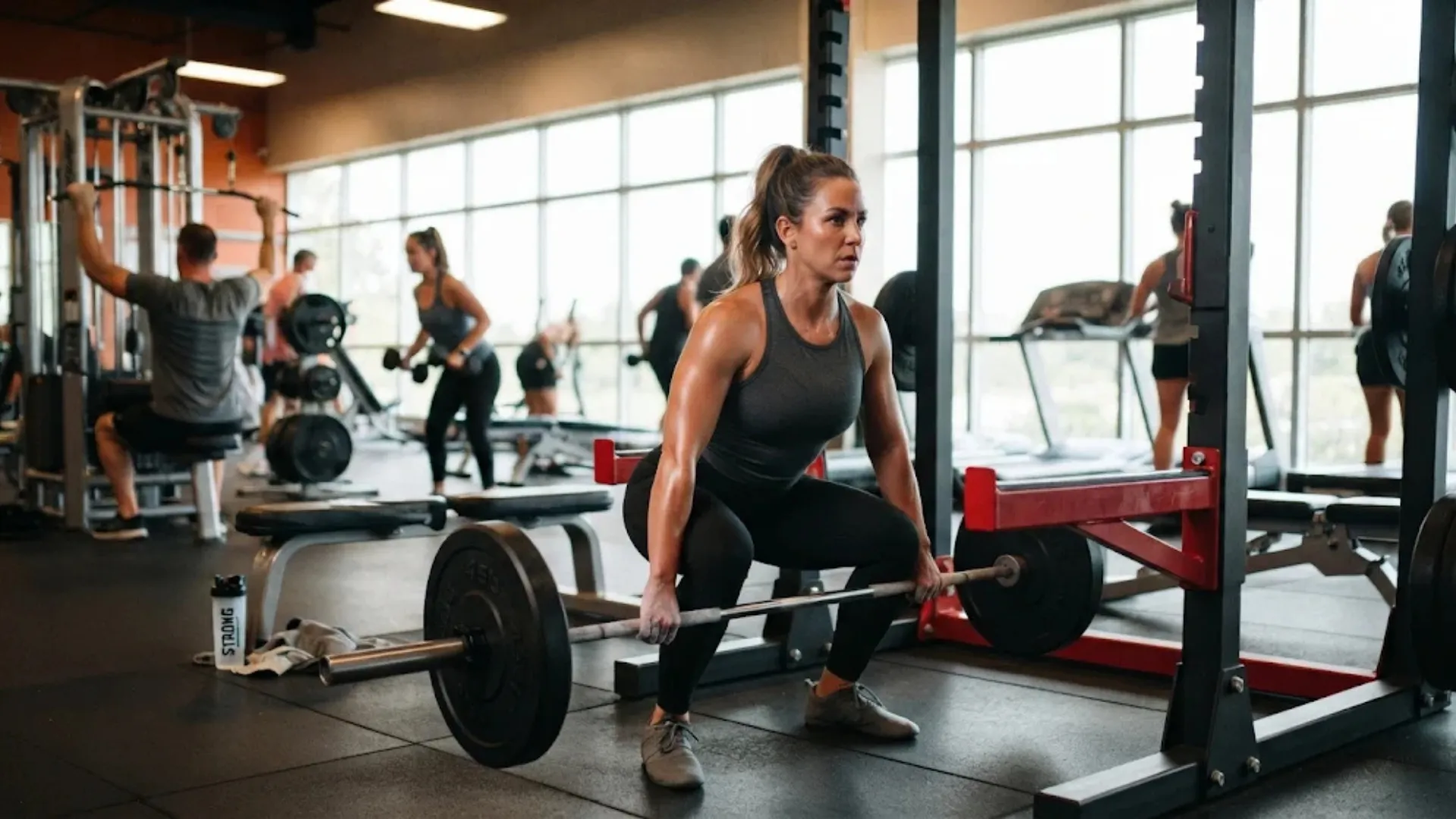
Strength training is one of the most valuable forms of exercise for adults over 50. Muscle mass and strength can gradually decline with age, particularly when you don’t regularly challenge your muscles.
Resistance exercises help maintain muscle, improve functional strength, and support everyday activities.
Good beginner-friendly exercises include:
Chair squats: Strengthen your legs and glutes while practicing the movement of sitting and standing.
Wall push-ups: Work your chest, shoulders, and arms with a manageable level of resistance.
Resistance band rows: Strengthen your upper back and arms.
Glute bridges: Target your glutes and support hip strength.
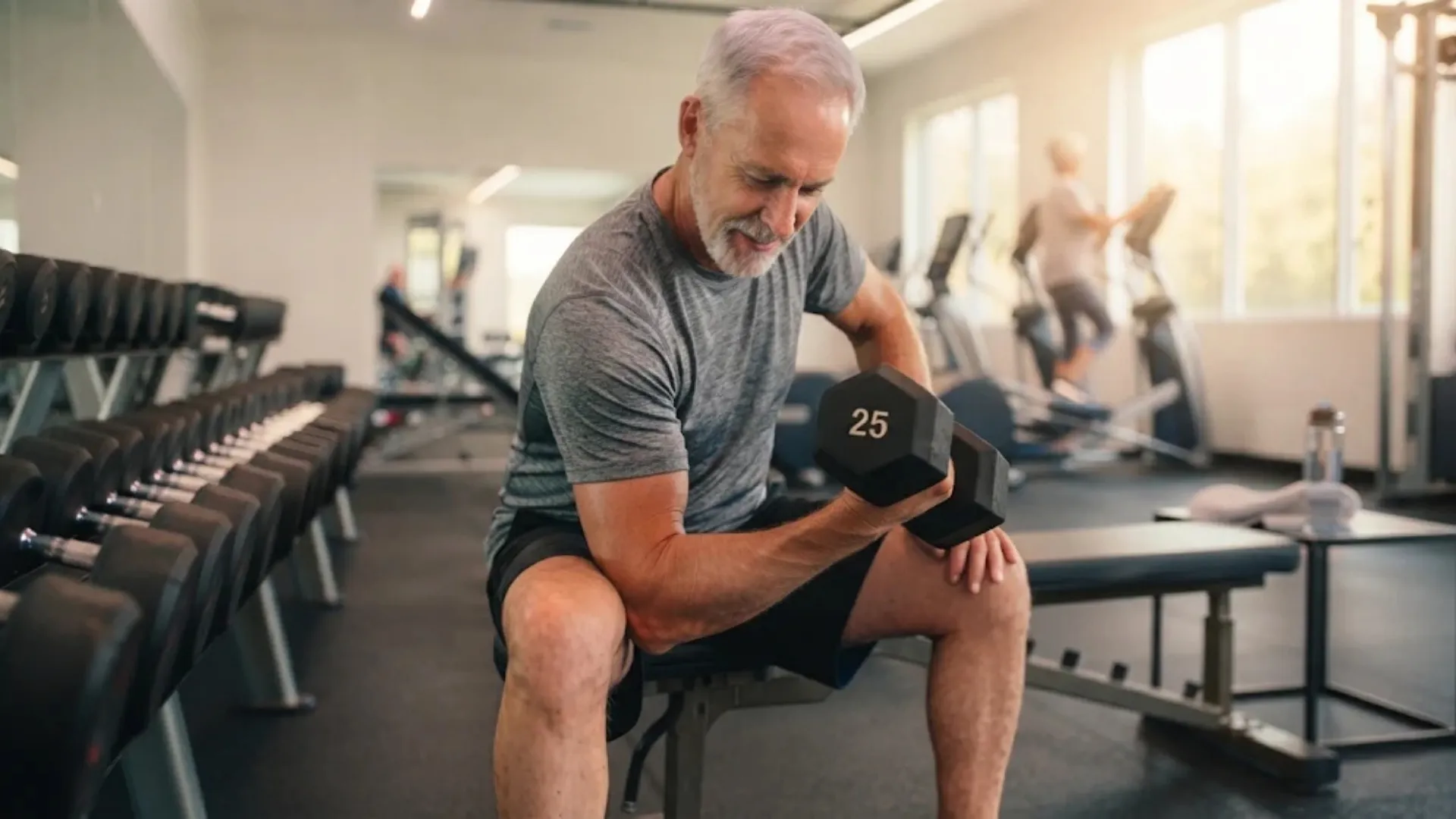
Light dumbbell presses: Develop upper-body strength.
Start with comfortable resistance and controlled movements. As your technique and strength improve, you can gradually increase repetitions or resistance.
If you’re interested in learning more about resistance training, read our guide to the best strength training program.
2. Cardiovascular Exercise for Heart Health
Cardiovascular exercise helps improve how efficiently your heart and lungs support physical activity. It can also make everyday tasks, such as walking longer distances or climbing stairs, feel easier.
Adults over 50 have several options, depending on their fitness level and preferences:
Brisk walking
Stationary cycling
Swimming
Water aerobics
Dancing
Elliptical training
Walking is an especially practical starting point because it requires little equipment and can be adjusted to your ability.
Try beginning with 15–20 minutes of comfortable walking and gradually increase the duration as your endurance improves.
For general health, adults should aim for at least 150 minutes of moderate-intensity aerobic activity per week. If you’re not currently active, start with shorter sessions and build toward that target gradually.
3. Balance Exercises to Improve Stability
Balance becomes an increasingly important part of fitness as we age. Improving stability can make everyday activities more comfortable and help reduce the risk of falls.
You don’t need complicated movements to practice balance. Try these exercises with a stable support nearby:
Single-leg stands: Stand on one foot while holding a chair or countertop if needed.
Heel-to-toe walking: Walk slowly in a straight line, placing one foot directly in front of the other.
Supported side leg raises: Lift one leg sideways while maintaining an upright position.
Controlled step-ups: Step onto a low, stable platform and return slowly.
Start with movements that feel comfortable and gradually reduce your reliance on support as your balance improves.
4. Mobility and Flexibility Exercises
Mobility exercises help you maintain comfortable movement in your hips, shoulders, ankles, and spine. They can also make it easier to perform strength exercises with proper technique.
Include gentle movements such as:
Shoulder circles
Hip rotations
Ankle circles
Gentle torso rotations
Seated hamstring stretches
Calf stretches
Spend around 5–10 minutes on gentle mobility work as part of your workout. Avoid bouncing or forcing your joints into uncomfortable positions.
Sample Weekly Workout Program for Adults Over 50
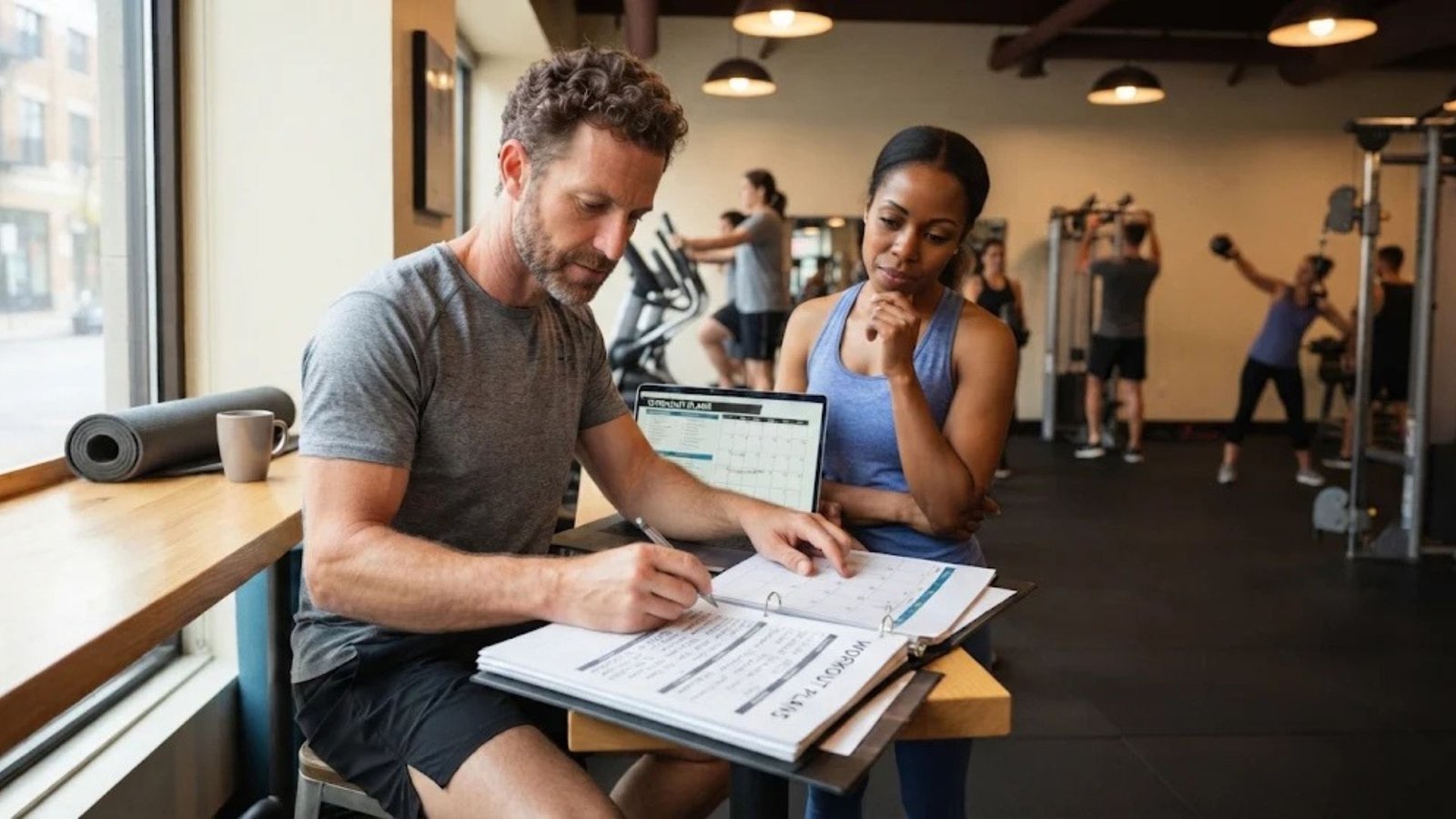
If you’re unsure how to combine these exercises, the following schedule provides a manageable starting point. Adjust the duration and difficulty according to your current fitness level.
| Day | Workout | Suggested Duration |
|---|---|---|
| Monday | Full-body strength training | 30 minutes |
| Tuesday | Brisk walking and balance exercises | 20–30 minutes |
| Wednesday | Rest or gentle mobility work | 10–15 minutes |
| Thursday | Full-body strength training | 30 minutes |
| Friday | Walking, cycling, or swimming | 25–30 minutes |
| Saturday | Balance exercises and gentle stretching | 15–20 minutes |
| Sunday | Rest and recovery | — |
This is a sample routine, not a requirement to follow every session. If you’re new to exercise, begin with shorter workouts and fewer sessions. Increase your activity gradually as your body adapts.
How Hard Should Adults Over 50 Exercise?
You don’t need to push yourself to exhaustion to benefit from exercise.
For strength training, choose a resistance that allows you to complete your repetitions with controlled movement and proper technique. You should feel challenged, but you shouldn’t need to hold your breath or sacrifice form.
For moderate cardio, such as brisk walking, use the talk test: you should be able to talk but find it difficult to sing.
Pay attention to how you feel during and after exercise. Mild muscle soreness can happen when starting a new routine, but sharp pain, dizziness, chest discomfort, or unusual shortness of breath should not be ignored. Stop exercising and seek appropriate medical advice if these symptoms occur.
If you have a chronic health condition, balance problems, or a history of injury, speak with a healthcare professional about suitable exercise options before beginning a new program.
For more information about exercising safely as you age, read our article on Is Strength Training Safe After Age 50?.
Common Workout Mistakes Adults Over 50 Should Avoid
The right workout program should help you improve without placing unnecessary stress on your body. Avoid these common mistakes:
Starting with too much intensity: Trying to do too much during your first few workouts can make recovery difficult. Begin with manageable exercises and increase the challenge gradually.
Skipping strength training: Walking and other cardio activities are beneficial, but they don’t fully replace resistance exercises for maintaining muscle strength.
Ignoring balance and mobility: Strength and endurance are important, but maintaining stability and comfortable movement also supports everyday independence.
Using poor exercise technique: Lifting too heavily or rushing through movements can increase unnecessary strain. Prioritize controlled movement and appropriate resistance.
Not allowing enough recovery: Your muscles need time to recover between challenging strength sessions. Schedule rest days and pay attention to persistent fatigue.
How to Stay Consistent With Exercise After 50
The best workout program is one you can maintain. You don’t need to make dramatic changes to your lifestyle overnight.
Here are a few ways to make exercise a regular habit:
Choose realistic goals. Start with something specific, such as completing two strength workouts each week.
Schedule your sessions. Choose days and times that work with your daily responsibilities.
Find activities you enjoy. Walking, swimming, cycling, and dancing can make staying active more enjoyable.
Track your improvements. Record your repetitions, walking time, or exercises completed.
Adjust when necessary. Modify exercises if your abilities, recovery, or physical needs change.
You can also explore our article on how to choose the right fitness program for additional guidance on finding a routine that matches your goals and lifestyle.
Frequently Asked Questions
What is the best exercise for adults over 50?
There isn't one exercise that covers every fitness need. A combination of strength training, walking or other cardio, balance exercises, and mobility work provides a more complete approach.
How many days a week should adults over 50 exercise?
A practical starting point is two days of strength training each week, alongside regular cardiovascular activity and balance practice. Your schedule should account for your fitness level and recovery needs.
Is it safe to lift weights after 50?
Yes. Strength training is generally safe and beneficial for many adults over 50 when exercises, resistance, and progression are appropriate. Beginners should focus on proper technique and avoid lifting more than they can comfortably control.
Can adults over 50 build muscle?
Yes. Adults can build muscle through consistent resistance training, appropriate nutrition, and adequate recovery. The program should gradually challenge the muscles while allowing enough time to adapt.
Is walking enough to stay fit after 50?
Walking is excellent for cardiovascular health and general activity, but it doesn't provide all the benefits of strength training. Adding resistance exercises and balance work creates a more balanced fitness routine.
What Is the Best Workout Program for Adults Over 50? Build Strength for the Years Ahead
The best workout program for adults over 50 is one that supports strength, heart health, balance, and mobility without overwhelming your body.
Combining resistance training, cardiovascular exercise, balance practice, and gentle mobility work can help you maintain physical ability and stay active as you age.
Start with exercises that match your current fitness level. Focus on proper technique, allow enough recovery, and make gradual improvements instead of rushing toward results.
Remember, it’s never too late to work on your strength and fitness. Small, consistent efforts can help you stay active and enjoy the activities that matter to you.
Get Personalized Fitness Guidance at Lakeland Personal Training
Not sure which exercises are appropriate for your current fitness level? Lakeland Personal Training can help you explore a personalized workout approach based on your goals, abilities, and lifestyle.
Whether you want to maintain muscle, improve balance, build strength, or stay active as you get older, having a structured program can make your fitness journey easier to manage.